 Livraison gratuite : Irlande à partir de €50 | Royaume-Uni et Europe à partir de €100.

Hot-weather race season is arriving fast, and many triathletes are still treating heat preparation like an afterthought. That is risky. A strong bike and run engine can unravel quickly when rising core temperature, poor pacing, and a rushed hydration plan all collide.
This matters even more in 2026 because on-course setups are changing across major races. IRONMAN announced that Precision Fuel & Hydration PH 1000 will be the official hydration drink across the global IRONMAN and IRONMAN 70.3 series in 2026, while Maurten remains the on-course carbohydrate partner. In practice, that means athletes should expect hydration and fueling to be managed more separately than before and rehearse that split in training before race day.
Why heat prep matters
A recent meta-analysis on exercise heat acclimatisation in athletes found that heat blocks can reduce resting core temperature and heart rate, while also improving how athletes handle thermal strain during exercise. That does not make you heat-proof, but it can make hot racing more manageable.
The takeaway for race week is simple: do not wait for race morning to find out how your pacing, drinking, sodium intake, and gut respond in the heat.
What a practical 7-10 day heat block can look like
If your next race is likely to be warm, the goal is not to smash yourself with heroic sauna sessions. The goal is repeated, controlled exposure.
- Keep most sessions submaximal so the heat is the stressor, not an all-out workout.
- Use extra layers, indoor trainer sessions, midday easy runs, or post-session hot baths only if they fit your recovery.
- Start with shorter exposures and build gradually rather than forcing one huge session.
- Protect sleep and recovery. Heat work that ruins the rest of your week is usually a bad trade.
If you are already carrying high fatigue, a lighter protocol done consistently is usually more useful than one or two big heat sessions.
Hydration and fueling are not the same job
One of the better practical lessons from recent on-course nutrition trends is that fluid, sodium, and carbohydrate do not always need to come in the same bottle. That gives athletes more flexibility, especially in hot races where drinking to match conditions may not line up neatly with carbohydrate targets.
For most triathletes, the race-week rehearsal should answer four questions:
- How much can you comfortably drink in warm conditions without sloshing or bloating?
- How much sodium do you usually need when sweat losses rise?
- Can you still hit your carbohydrate target when hydration needs increase?
- What does your stomach tolerate late in the bike and early in the run?
Exercise-associated hyponatremia remains a real risk in endurance events, and the problem is usually driven by overdrinking rather than simply under-consuming sodium. That is why copying someone else's bottle plan can backfire.
What to rehearse this week
- Your first 60-90 minutes on the bike in race-day heat.
- The exact bottle concentration you plan to use.
- The handoff between drink calories and gel calories.
- Your sodium plan if conditions become hotter than forecast.
- Your early-run intake, when many athletes stop eating enough.
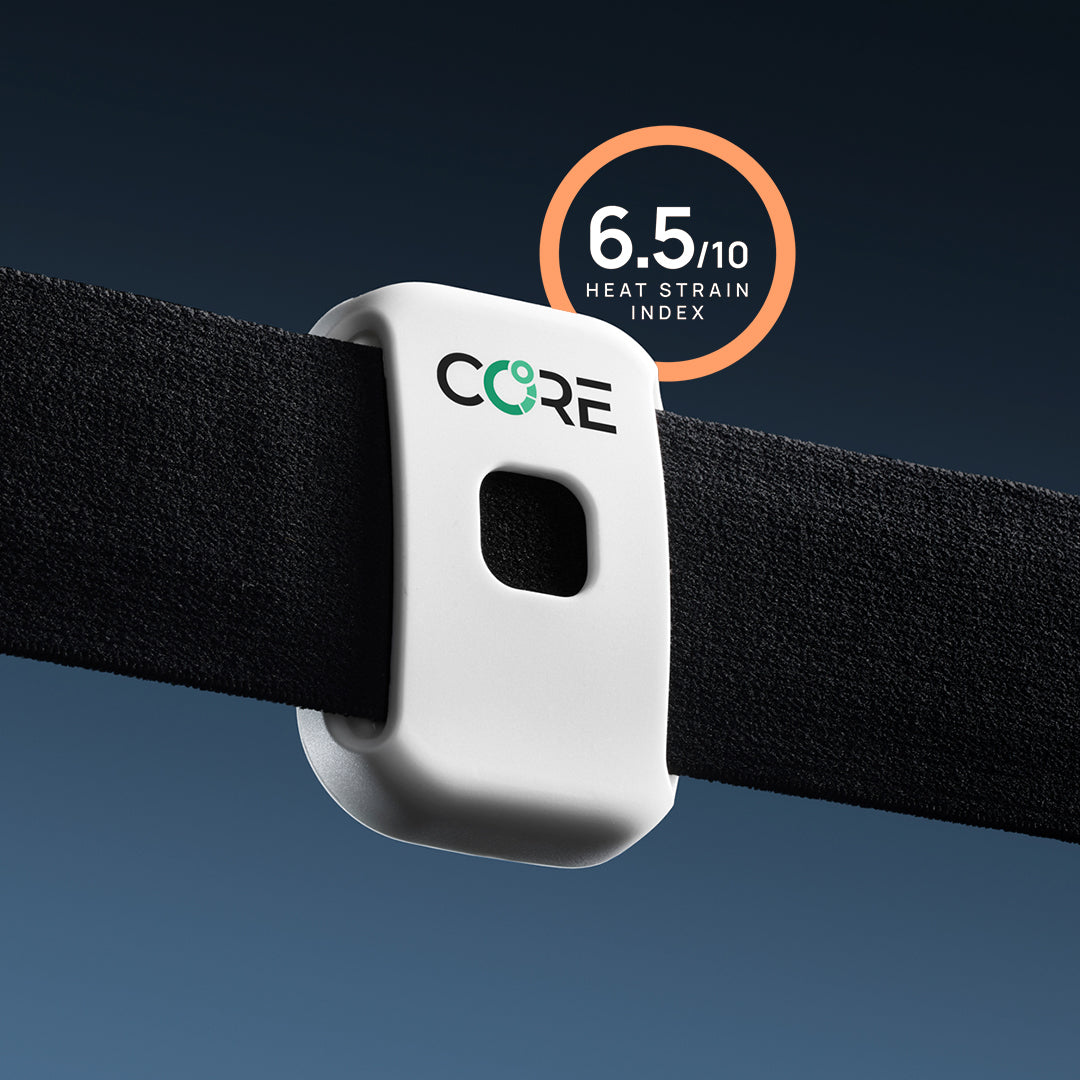
This is also where advanced tools can help. A product like CORE 2 Thermal Sensor can be useful for athletes and coaches who want to see how body temperature trends during steady work in the heat. It is not essential for everyone, but it can help turn vague heat sensations into practical pacing and cooling decisions.
Recommended products
CORE 2 Thermal Sensor: Relevant for athletes who want more objective feedback during heat blocks, especially when preparing for hot middle- and long-course racing.
Nduranz Energy Gel 45g Carbohydrate: Useful if you want to keep carbohydrate intake separate from hydration and still hit a meaningful grams-per-hour target.
Frequently asked questions
How long does heat acclimation take?
Many athletes can gain useful adaptation within about 7-14 days, but the exact response varies with fitness, environment, and how specific the heat exposure is.
Should I drink as much as possible in a hot race?
No. More is not always better. Your goal is to manage fluid losses without forcing intake so aggressively that you create gut issues or overdrinking risk.
Do I need a core temperature sensor?
No. Most athletes can still improve with smart pacing, repeated heat exposure, and race-specific hydration practice. Sensors are an optional tool for athletes who want more feedback.
Shop the range
If you have a hot-weather race coming up, build your plan around what you can actually execute: repeatable heat exposure, a separate hydration and fueling strategy, and products you have already tested in training.
Shop Testing & Diagnostics | Shop Fuel & Energy | Shop During Training